Note: The following financial figures generally refer to the continued operations, excluding the environmental technology business divested on October 31, 2025.
Bietigheim-Bissingen, March 5, 2026 — The Dürr Group significantly increased its operating profitability in 2025 despite the challenging macroeconomic environment. EBIT before extraordinary effects rose by 19% to €232 million. At 5.6%, the margin was slightly above the target corridor of 4.5% to 5.5%. The main drivers were strong earnings in the Automotive division and improved earnings resilience in woodworking technology at Group subsidiary HOMAG. Group earnings after tax doubled to €206 million. In addition to improved operating performance, it benefited from a high book profit (€227 million after tax) from the sale of the environmental technology business in October. Free cash flow also reached a very high level at €162 million. For 2026, the mechanical and plant engineering firm aims to further increase its EBIT margin before extraordinary effects. However, this assumes that the war in the Middle East will only have a temporary adverse impact on the global economy.
Dr. Jochen Weyrauch, CEO of Dürr AG, says: “2025 was challenging. Tariff disputes and geopolitical tensions dampened many customers’ willingness to invest. The fact that we were nevertheless able to deliver a significant increase in earnings underlines the resilience of our business model. In view of the ongoing uncertainties, we will continue to focus on optimizing our costs and strengthening our competitiveness. On this basis, we aim to achieve profitable growth again in the future, provided the current developments do not lead to prolonged market turbulence.”
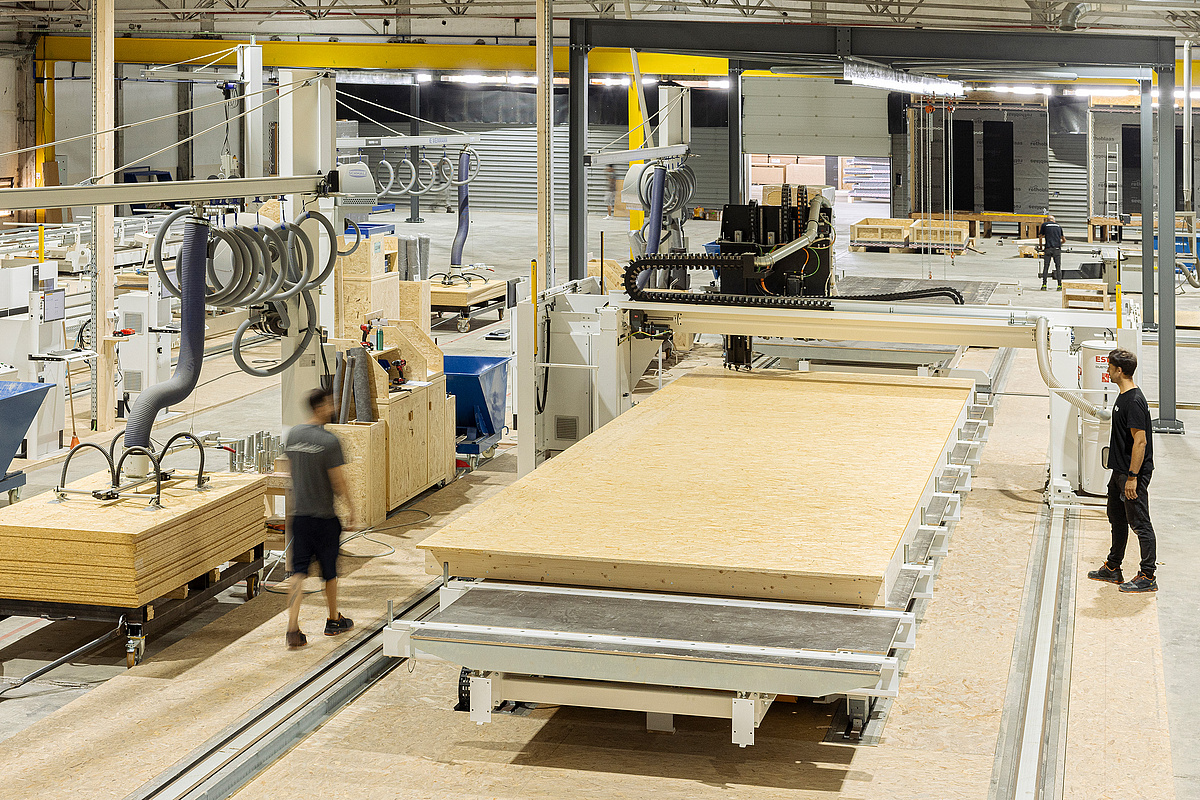
At €3.89 billion, order intake was below the previous year’s figure (-18%). This was expected to some extent, as 2024 had been marked by record order intake in painting technology. In addition, order intake in the second and third quarters of 2025 was significantly affected by economic uncertainty resulting from tariff disputes. In each of the two quarters, order volume reached only around €0.8 billion. The fourth quarter saw a marked improvement to €1.25 billion, driven in part by two major painting technology projects in North America and Europe. In addition, HOMAG secured its largest order to date in production technology for climate-friendly timber houses, with a value in the high double-digit million-euro range. Also in general, demand in timber house construction continued to pick up, while a recovery in the furniture industry business has yet to materialize.
Sales declined by 3% in 2025 to €4.17 billion. In addition to general economic weakness, this was also due to customer-induced delays in the execution of major projects.
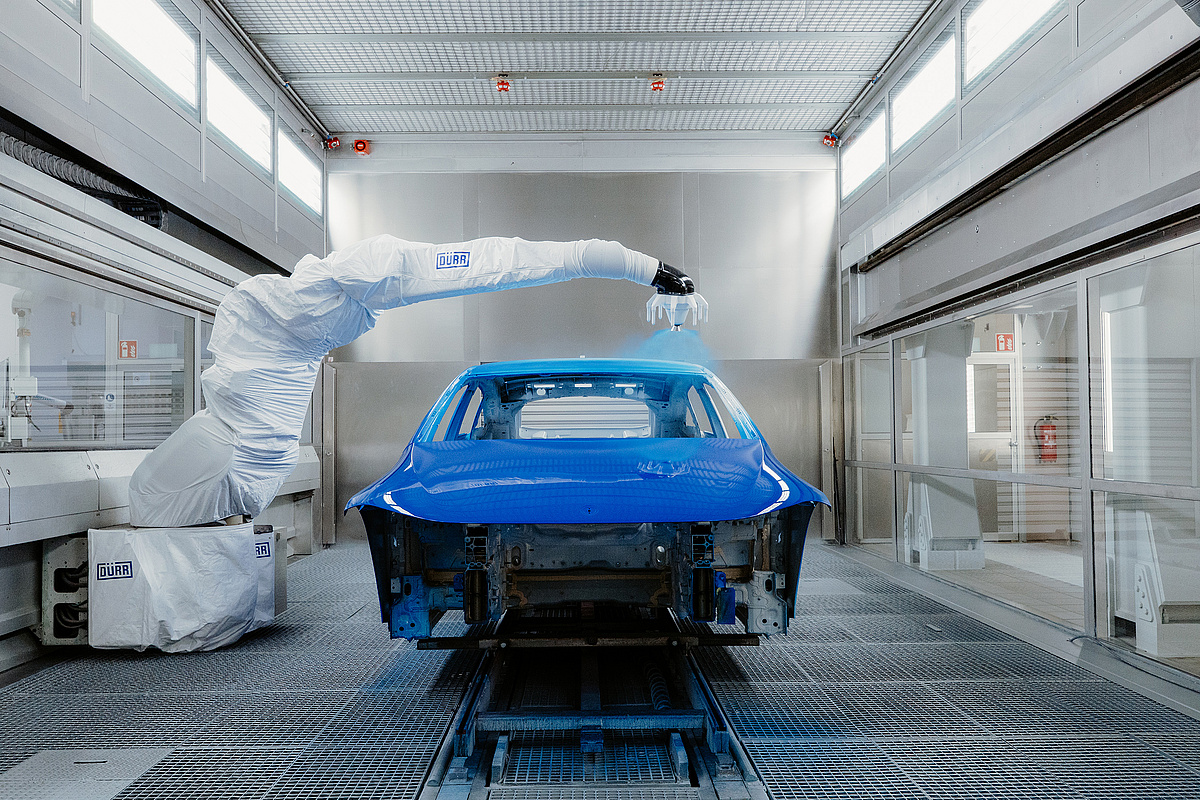
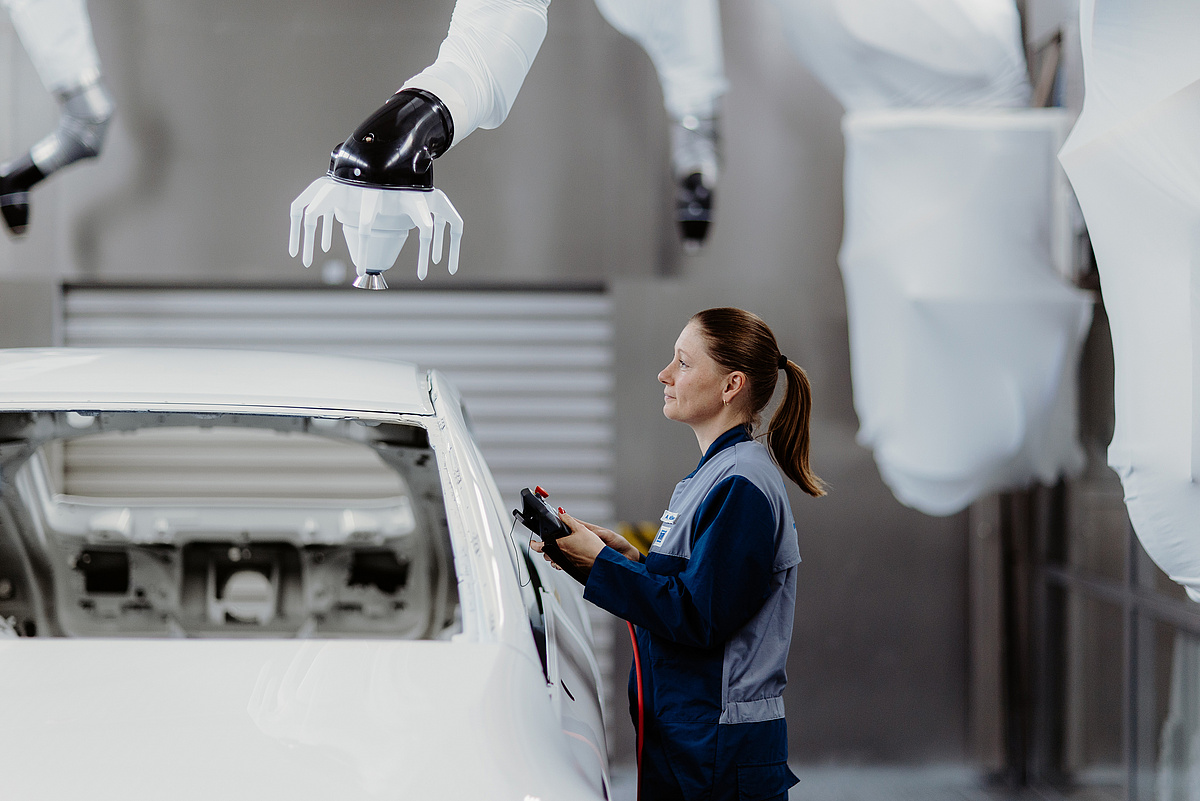
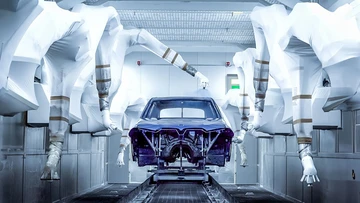
Painting technology, the Group’s largest business field, made a significant contribution to improving the operating margin. The Automotive division, which is responsible for this segment, increased its EBIT margin before extraordinary effects from 8.4% to 8.6%. The Woodworking division, formed by HOMAG, increased its margin from 3.6% to 5.5% despite slightly lower sales. This was based on cost reductions and efficiency gains, which enabled HOMAG to adapt to the weak demand in the furniture industry that has persisted since the end of 2022. The Industrial Automation division generated a low margin of 3.4%, primarily because battery production technology posted a loss due to market weakness in Europe. Dürr recently reorganized this business and assigned it to the Automotive division at the beginning of 2026.
The high Group earnings after tax (€206 million) were partly attributable to the book profit from the sale of the environmental technology business. This was offset by extraordinary expenses totaling €204 million. The largest item in extraordinary expenses comprised non-cash impairments in Industrial Automation (€135 million). In addition, expenses of €38 million for restructuring measures were recognized, largely relating to the reduction of around 500 administrative positions announced in the summer.
Group restructuring successfully advanced
The adjustment of the administrative area is part of a far-reaching transformation under which Dürr has positioned itself in a leaner and more efficient way since mid-2024. As part of the Group restructuring, the number of divisions was reduced from five to three. Under the motto “Sustainable.Automation” the Group now focuses on its core business of automated and sustainable production processes. Non-core businesses such as environmental technology (around €400 million in sales) and the filling technology business of Agramkow (around €45 million in sales) were divested. In addition, paint shop construction and the painting robot segment were combined within the new Automotive division. Dr. Jochen Weyrauch states: “With the Group restructuring largely completed, Dürr is now leaner and more resilient. Our highly automated, energy-efficient, and sustainable production processes enable our customers to increase their efficiency and competitiveness.”
Free cash flow of €162 million marks a ten-year record. However, it includes advance customer payments that were not expected until 2026. Due to the high free cash flow and the proceeds from the sale of environmental technology (€295 million gross), net financial debt fell by €331 million to €66 million. CFO Dietmar Heinrich says: “Our balance sheet is rock solid. Net financial debt is back at the low level seen before the acquisition of BBS Automation. At the same time, we achieved an equity ratio of just under 30%. Financially, we are well positioned for our planned future growth.”
The number of employees declined by 3.9% year-on-year to 17,881 as of December 31, 2025. In Germany, the Group employed 8,552 people, compared with 8,884 on the same date in the previous year.
Outlook: Further margin improvement targeted for 2026
In light of the geopolitical and trade policy conflicts and the recent escalation in the Middle East, macroeconomic uncertainty is expected to remain very high. The outlook assumes that the impact of international conflicts, particularly the war in the Middle East, will remain limited and will not lead to lasting market turbulence.
Order intake in 2026 is expected to reach between €3.8 and €4.2 billion and could therefore increase by up to 8%. The sales target is €3.9 to €4.3 billion, taking into account the previous year’s decline in order intake. The forecast for the EBIT margin before extraordinary effects is 5.0% to 6.5%. Basically, the Board of Management aims for a further margin improvement. This is underpinned, for example, by additional earnings potential at HOMAG, the elimination of losses in the battery business, operational optimizations in the automation business of BBS Automation, and cost reductions in the administrative area.
All figures for the 2025 fiscal year are preliminary and unaudited. They have not yet been approved by the Supervisory Board. The 2025 annual report containing the final figures will be published on March 26, 2026.