We use cookies, similar technologies and tracking services

This website uses cookies, similar technologies and tracking services (hereinafter referred to as “Cookies”). We need your consent for Cookies, which not only serve to technically display our website, but also to enable the best possible use of our website and to improve it based on your user behavior, or to present content and marketing aligned with your interests. For these purposes, we cooperate with third-party providers (e.g. Salesforce, LinkedIn, Google, Microsoft, Piwik PRO). Through these partners you can also receive advertisements on other websites.
If you consent, you also accept certain subsequent processing of your personal data (e.g. storage of your IP address in profiles) and that our partners may transfer your data to the United States and, if applicable, to further countries. Such transfer involves the risk that authorities may access the data and that your rights may not be enforceable. Please select which Cookies we may use under ”Settings”. More information, particularly about your rights, e.g. to withdraw consent, is available in our Privacy Policy .

Settings

Only technically necessary Cookies

Accept everything

Below, you can activate/deactivate the individual technologies that are used on this website.

Accept All

Essential

These Cookies make a website usable by providing basic functions such as page navigation, language settings, Cookie preferences and access to protected areas of the website. Cookies in this category additionally ensure that the website complies with the applicable legal requirements and security standards. Owing to the essential nature of these Cookies, you cannot prevent their use on our website. Details about these Cookies are available under 'More information'.

Functionality and personalization

These Cookies collect information about your habits when using our web pages and help us to enhance your user experience by tailoring the functions and attractiveness of our web pages based on your previous visits, location and browser settings. They also enable access to integrated third-party tools on our website (e.g., Microsoft Azure for single sign-on authentication). This can involve transferring your data to the United States (for information on the risks involved read Clause 1.5 of our Privacy Policy). If you refuse these Cookies, you might not be able to access the full functionality of the website. Details about the tools we use are available under 'More information'.

Analysis

These Cookies are used to compile basic usage and user statistics based on how our web pages are used (e.g. via Google Tag Manager, Piwik PRO). If you accept these Cookies, you simultaneously consent to your data being processed and transmitted to the United States by services such as Salesforce Pardot (for information on the risks involved read Clause 1.5 of our Privacy Policy). Details about the tools we use are available under 'More information'.

Marketing and social media

These Cookies help third-party sources collect information about how you share content from our website on social media or provide analytical data about your user behavior when you move between social media platforms or between our social media campaigns and our web pages (e.g., LinkedIn Insights). Marketing Cookies from third-party sources also help us measure the effectiveness of our advertising on other websites (e.g. Google Ads, Microsoft Advertising). We use these Cookies to optimize how we deliver our content to you. The third-party sources and social media platforms we use can transfer your data to the United States (for information on the risks involved read Clause 1.5 of our Privacy Policy). If you accept these Cookies, you simultaneously consent to your data being transferred and processed as described above. Details about the tools we use and our social media presence are available under 'More information'.

More information

Save Settings

  • Timber construction facade behind trees.
Press Release

Timber construction — a growth market: HOMAG relies on production technology for sustainable housing

Bietigheim-Bissingen, March 5, 2025 — The housing shortage is becoming increasingly acute, particularly in major cities. At the same time, the construction industry remains under pressure: Although demand is picking up again, the sector continues to face skilled labor shortages, high material and financing costs, overregulation, and slow approval processes. One way out of the crisis is serial construction using timber building modules. Dürr subsidiary HOMAG is also pursuing this approach. The company is one of the world’s leading suppliers of systems for the automated production of construction elements for climate-friendly timber houses. Following the easing of the construction crisis, HOMAG is seeing renewed growth in this business. In 2025, order intake reached a record €235 million. In addition to the construction of new houses, the energy-efficient refurbishment of existing buildings using timber insulation cladding also promises growth potential.

In serial construction, building modules are prefabricated industrially in automated factories and can then be assembled on site within just a few days. This saves time and costs, while also helping companies better address labor shortages. Timber houses — including multi-story buildings — are better suited for serial production than conventional buildings, for which automated manufacturing is difficult to implement.

Wood as a raw material also scores highly in environmental terms. Unlike concrete, wood absorbs carbon dioxide from the atmosphere — one cubic meter of wood stores approximately one ton of carbon. When used in buildings, this natural construction material can last for centuries, serving as a carbon store. Unlike other building materials, it can also be dismantled and recycled with low energy input, thereby supporting the principles of the circular economy. As a renewable resource, wood is not at risk of becoming scarce, provided forests are managed with foresight.

Good growth opportunities
While growth forecasts for the construction industry on the whole are moderate, timber construction offers above-average opportunities. The proportion of residential buildings constructed using timber has been increasing for years. In Germany, it stood at around 28% in the first half of 2025. Timber is also increasingly being used in the construction of multi-story residential buildings and infrastructure projects such as daycare centers and schools. In addition, countries such as the United States, where timber has traditionally been the predominant construction material, are seeking to move away from time- and labor-intensive manual processes and are increasingly turning to prefabrication and automation.

Further potential lies in the refurbishment business. In Germany alone, 3.4 million residential units in apartment buildings will need to be modernized in the coming years. Timber cladding elements are ideally suited for energy-efficient refurbishment. By moving their production to factories, the precision-made and pre-insulated elements can be installed on site easily and with minimal disturbance. This makes refurbishment faster, more cost-effective, and less disruptive. Timber construction elements are also suited for expanding existing living space, particularly through rooftop additions.

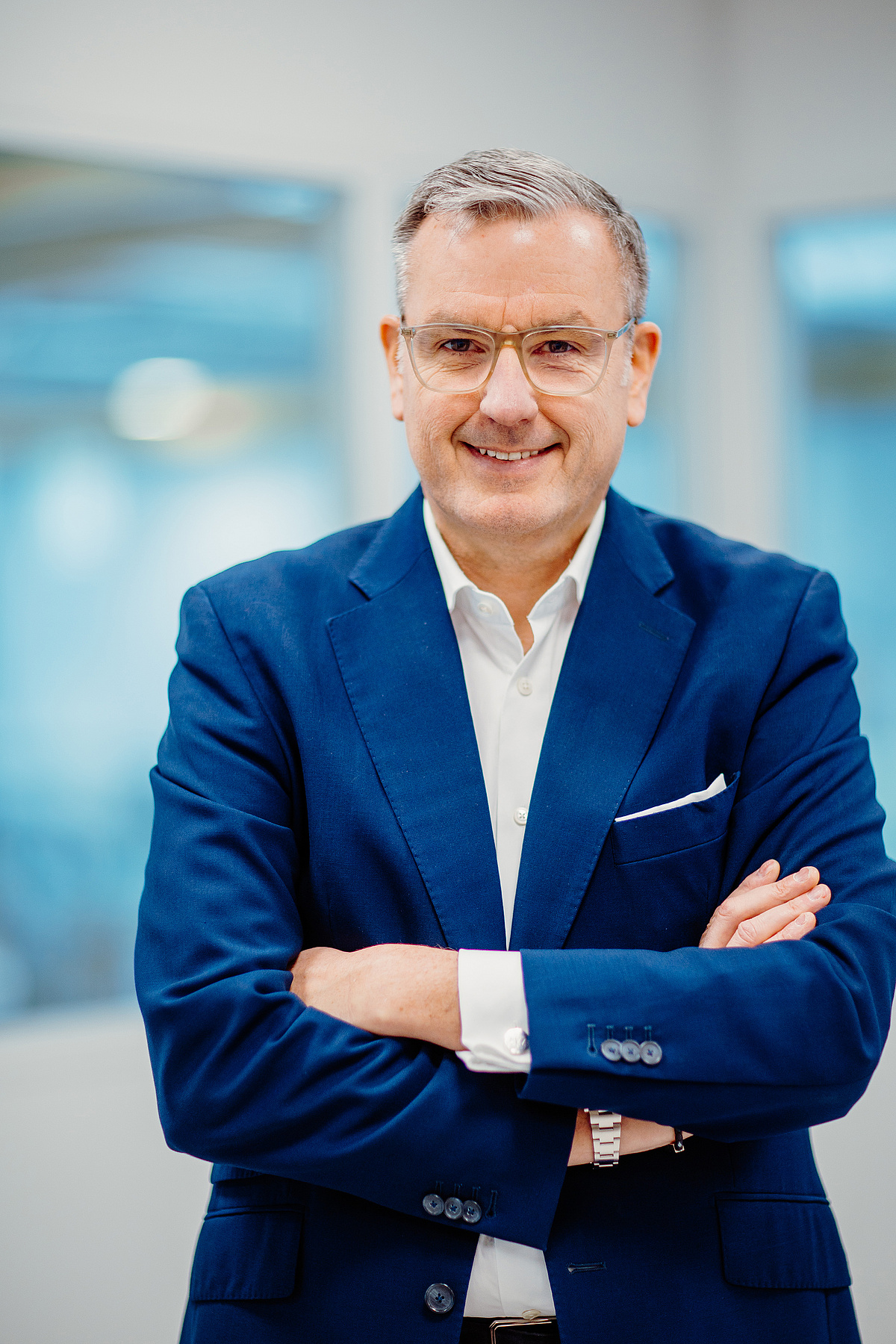
Dr. Jochen Weyrauch, CEO of Dürr AG, says: “The timber construction business is one of the most important growth areas for the Dürr Group. In the coming years, we expect sales to increase by an average of around 10% in this field. Serial timber construction can help alleviate the shortage of affordable housing and thereby address one of the most pressing societal problems. In addition, timber construction is a climate-friendly alternative to conventional, emissions-intensive building methods.”

Combined expertise
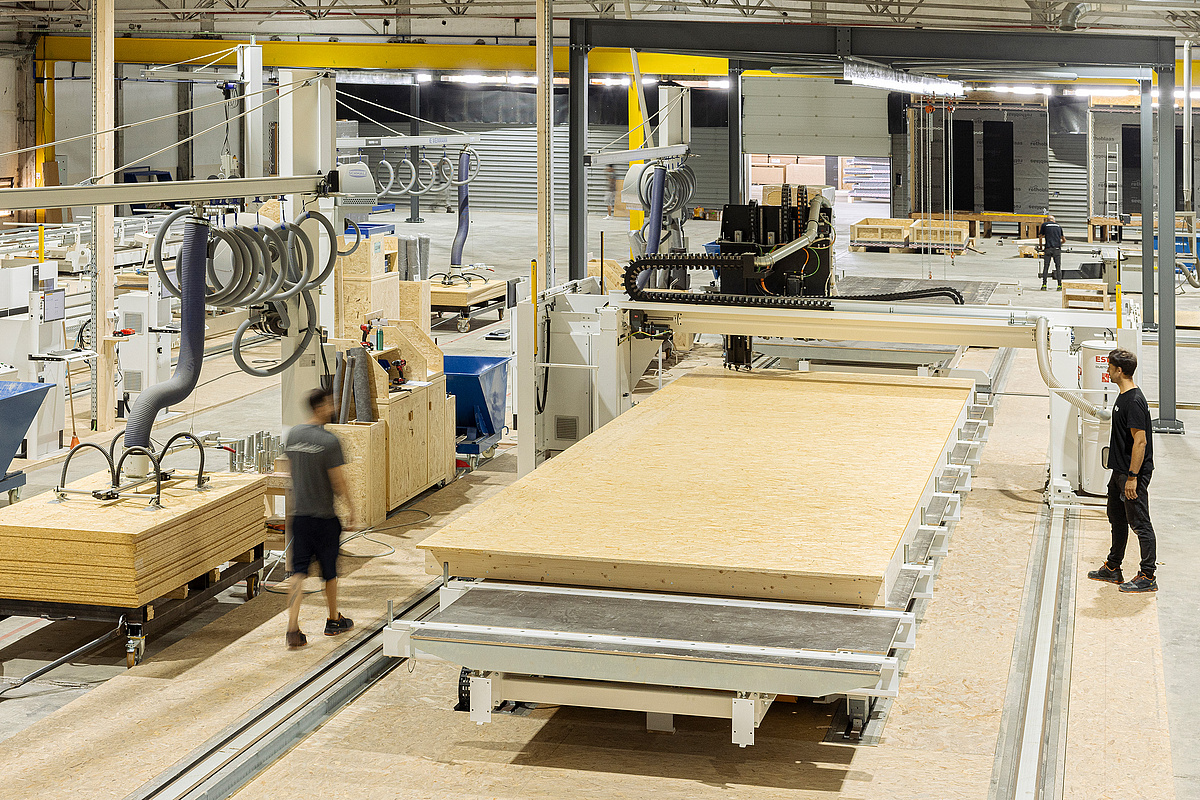
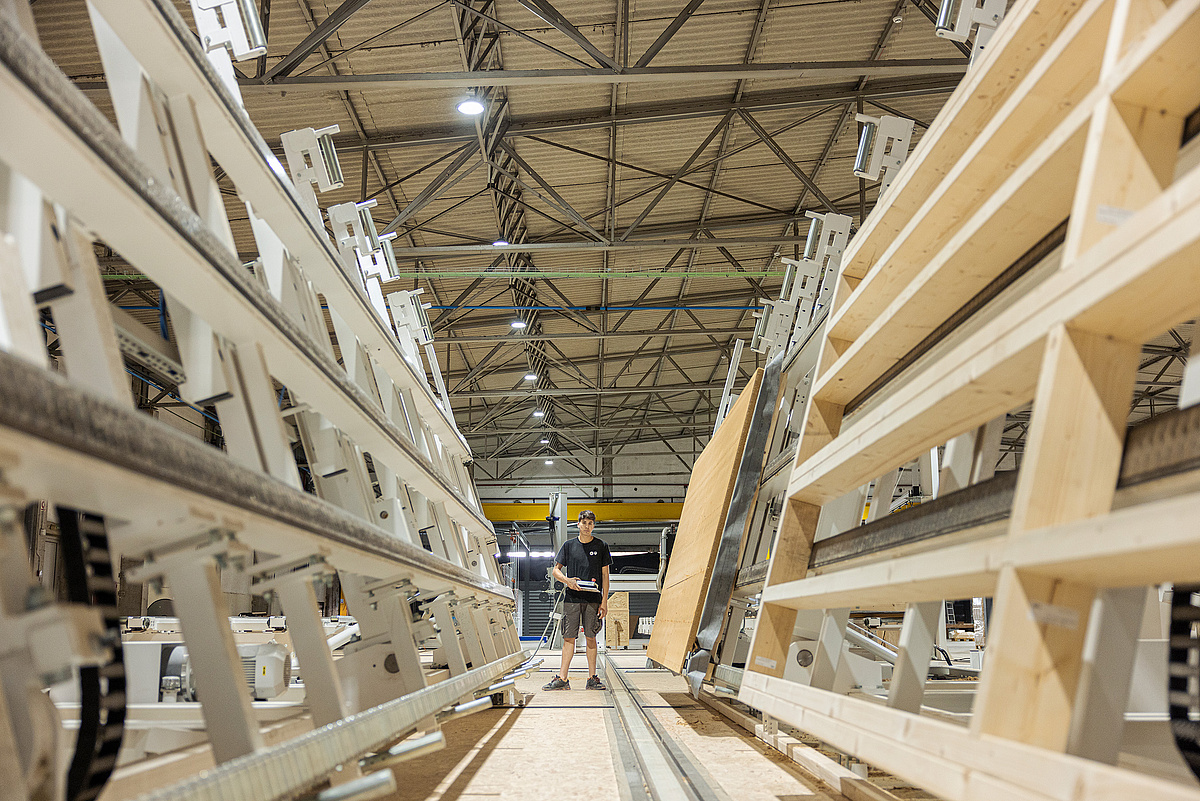
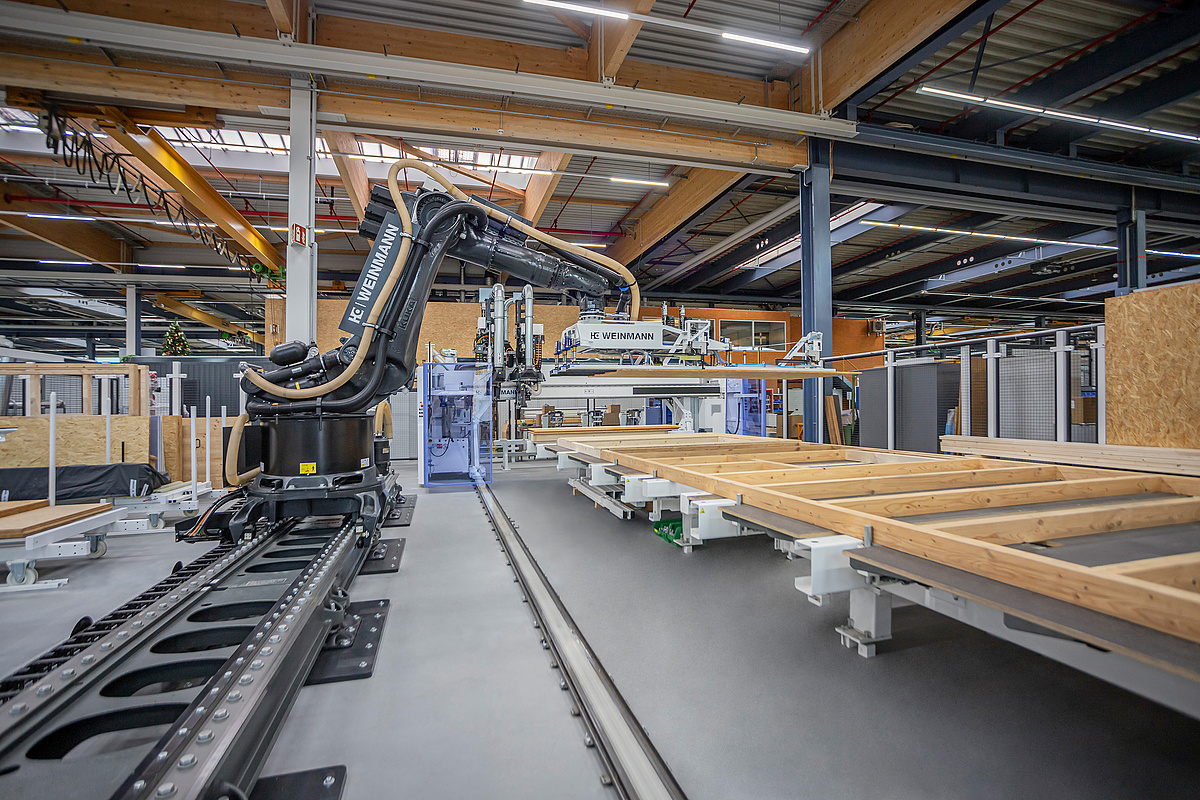
Three HOMAG subsidiaries in Germany and Denmark supply the machines and systems required for the industrialization of timber construction. Working closely together, Weinmann, System TM, and Kallesoe cover all key process steps required for manufacturing wall, ceiling, and roof elements.

HOMAG is also among the most capable suppliers of production technology for timber construction internationally. This is underscored by a major order from North America in the high double-digit million-euro range, which was placed at the end of 2025. It is HOMAG’s largest timber construction order to date, involving the delivery of several lines for the automated production of timber construction modules for single-family homes and apartment buildings. HOMAG has experience with projects of a similar scale. In 2021, the company built its first complete factory for timber construction elements such as walls and ceilings in the German state of Saxony-Anhalt.

The Dürr Group is one of the world's leading mechanical and plant engineering firms with particular expertise in the technology fields of automation, digitalization, and energy efficiency. Its products, systems, and services enable highly efficient and sustainable manufacturing processes – mainly in the automotive industry, for producers of furniture and timber houses, as well as in the assembly of medical and electrical products and in battery production. The Dürr Group generated sales of just under €4.2 billion in 2025 and currently has around 18,000 employees and 124 business locations in 32 countries. Since the sale of its environmental technology division at the end of October 2025, the business has been consolidated into three divisions:

  • Automotive: painting technology, final assembly, testing and filling technology as well as production technology for battery electrodes
  • Industrial Automation: assembly and test systems for automotive components, medical devices, and consumer goods as well as balancing technology solutions
  • Woodworking: machinery and equipment for the woodworking industry

This publication has been prepared independently by Dürr AG/Dürr group. It may contain statements which address such key issues as strategy, future financial results, events, competitive positions and product developments. Such forward-looking statements are subject to a number of risks, uncertainties and other factors, including, but not limited to those described in disclosures of Dürr AG, in particular in the chapter “Risks” in the annual report of Dürr AG. Should one or more of these risks, uncertainties and other factors materialize, or should underlying expectations not occur or assumptions prove incorrect, actual results, performances or achievements of the Dürr group may vary materially from those described in the relevant forward-looking statements. These statements may be identified by words such as “expect,” “want,” “anticipate,” “intend,” “plan,” “believe,” “seek,” “estimate,” “will,” “project” or words of similar meaning. Dürr AG neither intends, nor assumes any obligation, to update or revise its forward-looking statements regularly in light of developments which differ from those anticipated. Stated competitive positions are based on management estimates supported by information provided by specialized external agencies.

Our financial reports, presentations, press releases and ad-hoc releases may include alternative financial metrics. These metrics are not defined in the IFRS (International Financial Reporting Standards). Net assets, financial position and results of operations of the Dürr group should not be assessed solely on the basis of these alternative financial metrics. Under no circumstances do they replace the performance indicators presented in the consolidated financial statements and calculated in accordance with the IFRS. The calculation of alternative financial metrics may vary from company to company despite the use of the same terminology. Further information regarding the alternative financial metrics used at Dürr AG can be found in our → financial glossary on the web page.